ARCHI
PORTFOLIO BY LYNETTE LAW

PROJECT 2A : OBSERVATION DECK
PART 1 | Introduction to Site Analysis
In group of 2, conduct site analysis of the physical context within the overall site. Use the following reference as a framework for your recording and analysis of your site: White, E. 2004. Site Analysis: Diagramming Information for Architectural Design. Tallahassee, Florida: Architectural Media Ltd. Collect data and record on the following using physical maps/diagrams:
-
Site plan (Site section, Site Boundaries, North Point, Contours)
-
Existing Structure (Significant Architectural Language/Feature , Adjacent building/structure building to remain/demolish)
-
Landscape (Natural features, Soil Condition, Surface Drainage, Existing vegetation)
-
Climatic Studies (Sun path, wind direction, rain)
-
Circulation pattern (pedestrian, vehicular)
-
Views and Vistas (Panoramic /spot in, out, approaching)
-
Activities (category -dry/wet, zoning, noise)
-
Case Studies (Grand Canyon Skywalk, Arizona + Pinohuacho observation deck, Chile)
PART 2 | Observation Deck @ Cape Rachado
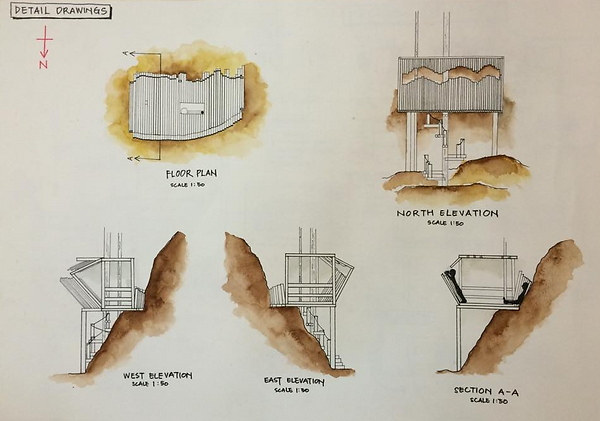
In group of 2, students are to design an Observation Deck (with a maximum volume of 30m3) for the purpose of observing the views. It shall include other activity(s) such as meditation, relaxation, etc. in which furniture and equipment must fit and be incorporated into the design. This structure should correspond to the site that you have chosen. Adequate access, circulation and fenestration are mandatory.



REFLECTION:


This project is more interesting compared to the previous one as I learnt how to design a building based on it's context more than the user itself. Understanding the SWOT of the selected site is very important on the first step of designing an obeservation deck. Other than that, this project gave me a fresh experience of designing a deck other than a house.